
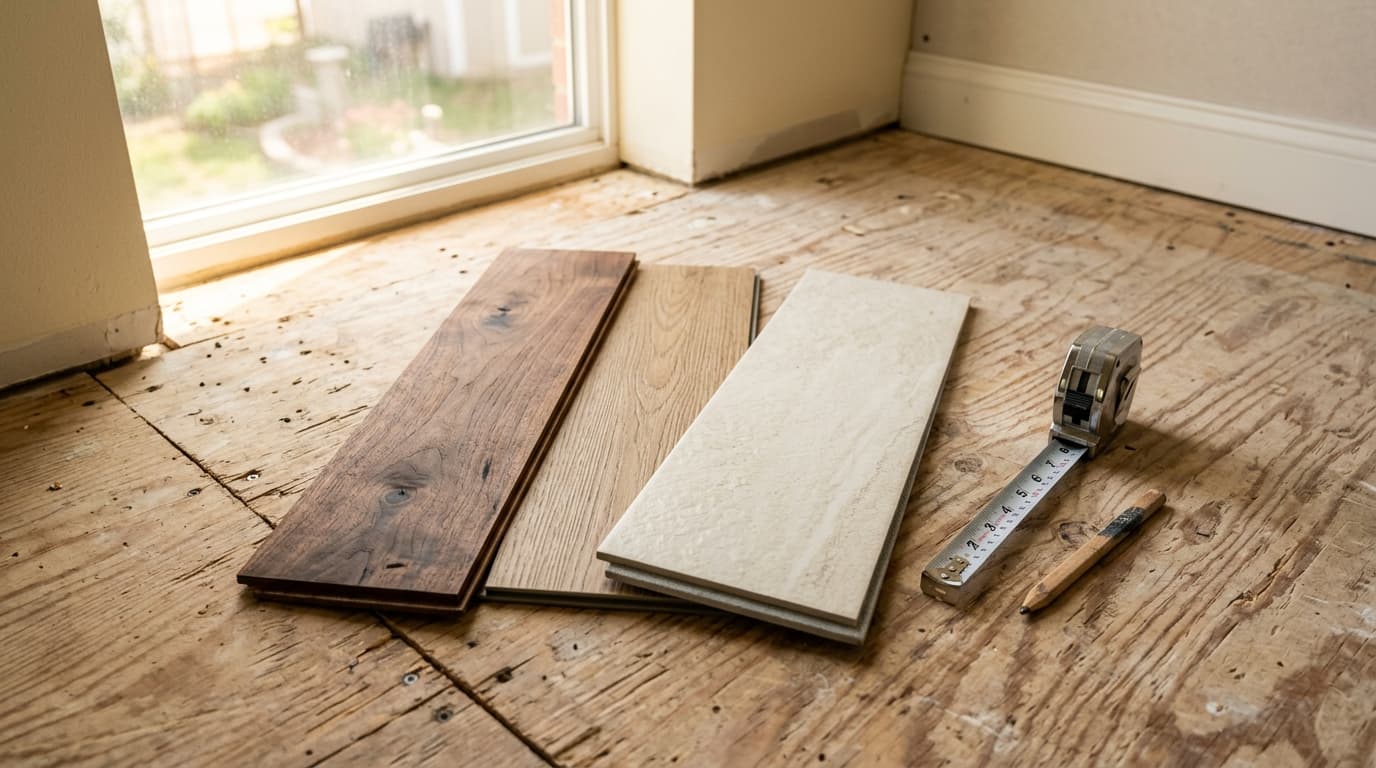

Flooring Installation Pricing: Hardwood vs LVP vs Tile (2026 Rates)
Flooring installation pricing is one of the most common questions homeowners ask, and one of the most common areas where flooring contractors underprice their work. This guide breaks down current 2026 rates for hardwood, LVP, and tile, what goes into those numbers, and how to make sure your bids cover what they actually cost.
The Market Reality in 2026
Flooring costs have shifted. Material prices across the residential construction sector have risen roughly 5-7% annually since 2023, and labor hasn't gotten cheaper. If you're quoting jobs at 2023 prices, you're already behind.
The average cost to install hardwood flooring in 2026 ranges from $6 to $25+ per square foot installed, depending on material grade, subfloor condition, and region, according to data compiled by Big Bro Hardwood. LVP runs $4 to $11 per square foot installed, per HomeGuide. Tile installation lands anywhere from $3 to $30 per square foot depending on tile type and complexity, per HomeAdvisor.
Those ranges are wide. The gap between the low and high end isn't random. It reflects real cost differences that homeowners often don't understand and contractors sometimes fail to communicate.
Let's break down each material.
Hardwood Flooring Installation Pricing
Material Costs
Hardwood flooring materials run $3 to $15 per square foot for the planks themselves, before installation. That range reflects the difference between builder-grade domestic oak and premium wide-plank walnut.
Engineered hardwood sits in the middle of that range and is often a smarter choice in spaces with humidity variation. Solid hardwood is the classic choice for clients who want to sand and refinish decades from now.
You also need to factor in:
- Underlayment: $0.25 to $0.75 per square foot.
- Transition strips: $15-$40 each, per doorway.
- Threshold pieces: Similar pricing to transitions.
- Adhesive or cleats: Depends on installation method (nail-down, glue-down, float).
Labor Costs
Hardwood installation labor runs $4 to $8 per square foot in most markets. Complex jobs push higher:
- Diagonal or herringbone patterns: Add $2-$4 per square foot.
- Subfloor prep, leveling, or repair: Quote separately by actual condition.
- Furniture moving: Either exclude it or price it explicitly.
Don't bundle subfloor work into your per-square-foot rate and hope it averages out. Subfloor problems are the biggest source of scope creep on hardwood jobs. Look at it, price it, put it in writing.
When to Charge More for Hardwood
Hardwood installation pricing needs to reflect the actual job, not a flat rate. Jobs that warrant higher rates:
- Old homes with out-of-level subfloors
- Rooms where existing flooring needs full demo and haul-off
- Staircase work, which is more labor-intensive per square foot than flat runs
- Client-supplied materials (you lose the material margin; make it up in labor)
LVP Flooring Installation Pricing
Why LVP Has Taken Over
Luxury vinyl plank has become the default flooring choice in a huge portion of residential jobs. It's water-resistant, forgiving on imperfect subfloors, faster to install than hardwood, and available at price points that work for almost any budget.
For contractors, LVP is profitable when you price it right and run efficient jobs. The material is faster to install than hardwood or tile, which means lower labor cost per square foot if you're efficient. But faster jobs don't mean lower rates.
Material Costs for LVP
LVP materials range from $2 to $8 per square foot depending on wear layer thickness, plank width, and brand. A standard 12-mil wear layer product sits around $2.50-$3.50 per square foot. Commercial-grade 20-mil products run $4-$8 per square foot.
Thicker wear layers are more durable and less prone to damage. For rental properties or high-traffic areas, steer clients toward better product. It reduces callbacks.
Additional LVP material costs:
- Underlayment (if not attached): $0.25-$0.50 per square foot.
- Moldings and transitions: Same pricing structure as hardwood.
- Adhesive: Required for some glue-down products; factor it in.
LVP Labor Costs
LVP installation labor typically runs $2 to $5 per square foot. Click-lock floating products install faster. Glue-down commercial products take longer.
Don't undercut your labor rate on LVP just because it's "easier." Your time is worth the same whether you're installing oak or vinyl. The skill you're being paid for includes knowing how to handle expansion gaps, read subfloor moisture readings, and cut around obstacles cleanly.
LVP Pricing Pitfalls
- Acclimation: LVP needs time to acclimate to room temperature. If your job gets scheduled back-to-back with delivery, build this into your timeline.
- Subfloor flatness: LVP tolerates more than hardwood but still has limits (typically 3/16" over 10 feet for floating installs). Check it before you start.
- Moisture: LVP is water-resistant, not waterproof. If the subfloor has a moisture problem, address it before installation.
Tile Flooring Installation Pricing
The Wide Range Explained
Tile has the widest pricing range of the three materials in this guide. A ceramic tile job in a bathroom might come in at $8 per square foot installed. A large-format porcelain job with diagonal setting and heated floor rough-in might hit $25-$30 per square foot.
The difference isn't random. It comes from:
- Tile size and weight: Large-format tiles (24x24 and above) require more adhesive, more time to set level, and more cuts.
- Pattern complexity: Straight-set is the baseline. Offset patterns, herringbone, and custom designs all add time.
- Grout joint size: Larger joints are faster. Tight joints (1/16" or less) require more precision.
- Subfloor preparation: Tile is unforgiving on movement. A concrete board or uncoupling membrane often needs to go down first.
Material Costs for Tile
Tile material costs:
- Ceramic tile: $2-$8 per square foot.
- Porcelain tile: $3-$12 per square foot.
- Natural stone: $5-$20 per square foot.
Plus:
- Thin-set mortar: $0.50-$1.50 per square foot depending on coverage and product.
- Grout: $0.25-$0.75 per square foot.
- Cement board or uncoupling membrane: $1-$3 per square foot.
- Sealer (natural stone or grout): $0.25-$1.00 per square foot.
Don't absorb these costs into a flat tile rate. Itemize them.
Labor Costs for Tile
Tile labor runs $3 to $12 per square foot depending on complexity. Straightforward ceramic floor tile: $3-$5. Complex large-format porcelain with heated floor integration: $8-$12.
Demo of existing tile, if needed, adds $1-$3 per square foot and generates significant haul-off.
Building Your Flooring Installation Pricing Structure
Know Your Cost Per Square Foot First
Before you quote anything, know your real cost. That means:
- Material cost per square foot (with waste factored in)
- Labor cost per square foot (your hourly rate divided into actual production speed)
- Overhead allocation (tools, insurance, truck, admin time)
- Desired net margin
Most flooring contractors should target a net margin of 15-20% on flooring jobs. The average net profit margin for US contractors overall runs around 7%, per Turner and Townsend's 2024 International Construction Market Survey. Flooring specialists who run efficient operations should do better than the average.
Waste Factors by Material
Apply waste to every material order:
- Hardwood: 10-15% (more for diagonal, herringbone, or irregular rooms).
- LVP: 10% standard; 15% for complex layouts.
- Tile: 10-15% for standard; 15-20% for large-format or diagonal.
Order the waste. Don't order tight. A second material run costs far more than a box of overage sitting in your truck.
Itemized vs. Flat-Rate Quotes
Flat-rate per-square-foot quotes are fast to produce and easy for clients to compare. They're also easy to lose money on.
Itemized quotes show the client exactly what they're getting: materials at cost plus markup, labor at your rate, prep work called out separately. They take longer to produce but protect you when conditions at the job site differ from what you saw during your walkthrough.
For jobs over $5,000, itemize. It protects you and gives you something to reference when the client wants to change the tile the week before install.
How Bit & Grain Helps Flooring Contractors
Getting your flooring installation pricing right matters more now than it did two or three years ago. Material costs have risen and clients are price-shopping harder.
Bit & Grain's estimate and invoicing tools let you build per-square-foot pricing with material markup, labor, and prep work as separate line items. You can duplicate last week's estimate, adjust quantities and materials, and send a professional quote in minutes.
At $29/month flat, it's priced for the kind of shop that doesn't have a full-time office manager. Everything runs from your phone. Compared to Jobber's entry tier at $69/month, you're keeping more of the money you earned.
Conclusion
Flooring installation pricing in 2026 spans a wide range, and that range is real. Hardwood, LVP, and tile each have distinct cost structures that reflect material costs, installation complexity, and prep requirements. The contractors who make consistent money on flooring jobs are the ones who know their actual costs, quote everything explicitly, and don't discount to win the job.
Know your numbers. Build your quote from real costs. Start free at bitandgrain.app.